
Most brands will tell you wallpaper can solve every home interior problem.
We won’t.
At Eximus Wallpaper, we manufacture wallpapers, install them, troubleshoot them, and — sometimes — tell customers not to buy them.
Yes, that sounds strange coming from a manufacturer.
But if there is one thing years of production, installation, and after-sales service have taught us, it’s this:
Wallpaper performs beautifully… but only on the right walls.
When the base isn’t ready, even the best wallpaper will struggle.
So, if you’re looking for a real, honest guide — not marketing fluff — this is it.
Below, we’re sharing exactly when you should avoid using wallpaper for wall, why it won’t perform well in certain conditions, and what you should do instead.
This is the truth from people who work with the material every day.
Situations Where Wallpaper May Not Perform Well
Wallpaper isn’t fragile.
Modern materials, advanced inks, strong adhesives, and fabric-backed options make it extremely durable.
But like every surface product, it has limitations.
If any brand says “Wallpaper works everywhere,” that’s not expertise — that’s sales.
Below are the six situations where we, as a wallpaper manufacturer, advise caution.
1. Extremely Damp or Leaky Walls
Let’s start with the biggest and most common reason wallpaper fails.
If your wall has:
- visible damp patches
- water lines
- wetness that returns even after cleaning
- surface bubbles
- dripping marks
- paint peeling with moisture underneath
Then wallpaper will not solve the problem.
Why?
Because wallpaper is a finishing material — not a waterproofing product.
It can hide a stain, but it cannot stop water coming from behind the wall.
A damp wall will cause:
- adhesive to weaken
- wallpaper edges to lift
- mold to grow behind the sheet
- surface bubbling
- patches to reappear
If the wall is leaking, wallpaper is the last thing you should install.
Manufacturer advice:
Fix the waterproofing issue first. Do not let anyone — installer or brand — convince you otherwise.
2. Houses With Severe Rising Damp
Rising damp is different from a normal seepage issue.
This is when the moisture travels from the ground upward.
You’ll see:
- bubbling at the lower part of the wall
- constant wetness near the skirting
- flaky plaster from the bottom up
- paint peeling in layers
Wallpaper cannot fight a structural moisture pathway.
As manufacturers, we’ve seen customers try:
- vinyl wallpaper
- thicker wallpaper
- fabric wallpaper
- heavy adhesive
None of these will stop rising damp.
The moisture keeps pushing upward, and eventually, the wallpaper lifts too.
Manufacturer advice:
Treat the rising damp professionally.
Only once the wall stays completely dry for weeks should wallpaper be considered.
3. Unfinished or Uncured Plaster
A newly plastered wall looks beautiful — smooth, fresh, clean.
But it is still wet from within, even if it feels dry on the surface.
A wall that hasn’t fully cured will hold moisture inside the cement.
When wallpaper is applied too early, this moisture tries to escape — and it will escape through the wallpaper.
This results in:
- bubbles after a few days
- patches reappearing
- mold spots forming
- adhesive not bonding
Most homeowners don’t realize plaster can take 30–60 days to fully cure depending on weather and thickness.
Manufacturer advice:
Do not install wallpaper on fresh plaster.
Wait for curing.
If needed, ask for a moisture check before installation.
4. Powdery, Chalky, or Flaking Walls
If you run your hand across your wall and fine dust comes off, the surface is not ready.
Wallpaper adhesive needs a stable base.
A powdery surface acts like a barrier — the adhesive bonds to the dust, not the wall.
This leads to:
- weak adhesion
- lifting edges
- corners peeling first
- entire sections coming off
- uneven sticking
We often see this issue in older homes, rental properties, or houses where the paint has aged.
Manufacturer advice:
Prime the wall properly.
A good primer seals the dust and strengthens the surface so wallpaper can grip firmly.
5. Mold-Affected Walls
Here is a hard truth:
If there is mold on the wall, it will grow behind the wallpaper too.
Wallpaper is not a mold treatment.
In fact, mold loves dark, hidden places — and the space behind wallpaper becomes the perfect environment if mold spores already exist.
Even if the installer cleans the surface, mold will return unless the actual cause is treated.
Signs of mold walls:
- black or green patches
- fuzzy texture
- musty smell
- cold, damp surface
Manufacturer advice:
Remove mold completely.
Use anti-fungal treatment.
Ensure the wall is dry and disinfected.
Only then consider wallpaper.
6. Newly Constructed Walls That Haven’t Settled
New constructions go through temperature shifts and micro-movements as the structure stabilises.
Walls may:
- crack slightly
- shift
- develop hairline lines
- expand and contract
Paint can tolerate this.
Wallpaper cannot always adjust to sudden shifts.
Especially for corners, joints, and multi-layered surfaces — movement can cause wallpaper to stretch or tear.
Manufacturer advice:
If the home is brand new, give it some time.
Ensure major settling is over before installing wallpaper for long-term durability.
Other Scenarios Where Wallpaper May Not Be Ideal
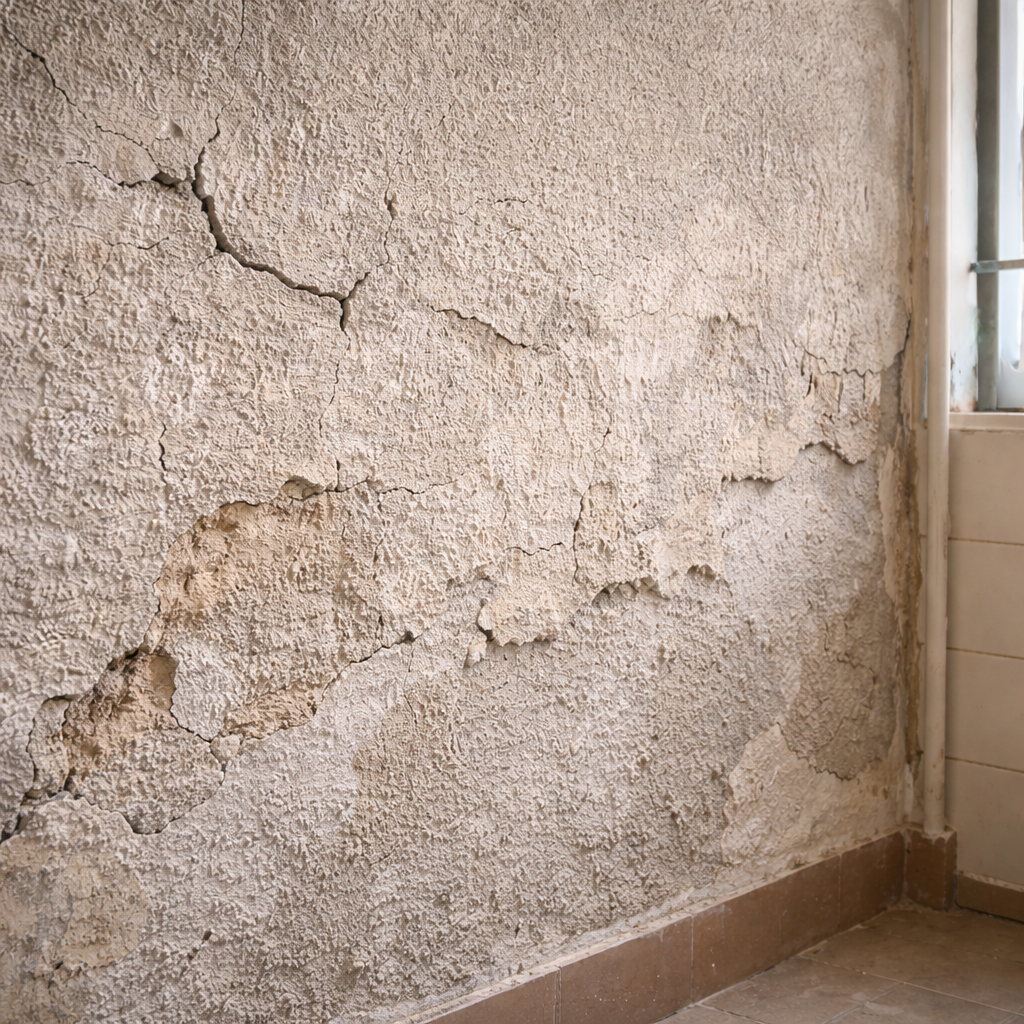
Extremely Textured Walls
Heavy textures create air pockets.
Wallpaper needs a flat base to look smooth.
Rental Homes With Restrictions
If the landlord doesn’t allow surface changes, wallpaper may not be allowed — even peel-and-stick types.
Walls With Active Leakage
If water drips from the same spot repeatedly, wallpaper will fail instantly.
How Wallpaper for Wall Helps — When the Base Is Right
Once the wall issues are solved, wallpaper becomes one of the most reliable, transformative, and long-lasting decor solutions.
Some homeowners think wallpaper is delicate.
It isn’t.
What’s delicate is the base wall — not the material.
Wallpaper performs beautifully when the wall is:
- sealed
- dry
- primed
- smooth
- stable
When these conditions are met, wallpaper:
- lasts years
- resists scratches
- handles humidity better than paint
- hides imperfections
- adds luxury instantly
The key is preparation.
Why We, as a Manufacturer, Choose Honesty Over Sales
Anyone can sell wallpaper.
Not everyone prepares a customer’s home to enjoy the wallpaper for years.
At Eximus Wallpaper, we prefer saying:
“Not now.”
“Fix this first.”
“This wall is not ready.”
“Let’s solve the issue before installation.”
Because we’ve seen what happens when shortcuts are taken.
The customer ends up frustrated.
The wallpaper looks bad.
The brand is blamed — even though the base wall was the real issue.
Honesty is not a marketing strategy for us.
It is a necessity.
How to Know If Your Wall Is Ready for Wallpaper
Here’s a simple checklist:
Your wall is NOT ready if:
- it feels damp
- it smells musty
- paint peels in layers
- dust rubs off when you touch it
- mold keeps returning
- plaster is less than 30–40 days old
- water spots reappear after cleaning
- cracks are still fresh or growing
Your wall IS ready if:
- it stays dry for weeks
- no signs of mold appear
- plaster is fully cured
- primer holds well
- the wall feels solid when tapped
- previous damp patches have not returned
If you’re unsure, it’s better to ask a professional for a moisture check.
The Manufacturer’s Golden Rule
Fix the wall…
and wallpaper will reward you for years.
Ignore the wall issue…
and even the best wallpaper will struggle.
We say this not to discourage you — but to protect the longevity of your home.
Wallpaper is a premium finish.
It deserves a ready base.
Final Word from Eximus Wallpaper
We create wallpaper every day.
We love it, we believe in it, and we’ve seen how dramatically it can transform homes.
But we also believe in honesty.
If your wall isn’t ready, we will tell you openly.
Because beautiful interiors are built on honesty, not shortcuts.
A well-prepared wall + the right wallpaper = years of beauty, comfort, and pride.If you’re ever unsure whether your walls are ready, just ask.
We’re here to help — truthfully, transparently, and always with your home’s best interest at heart.
Discover premium wallpaper for wall with Eximus – website, YouTube channel, Facebook, and Instagram, and discover our curated collection of designer wallpapers. Reach us at +91 8828151202.