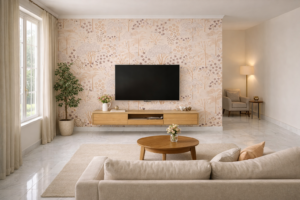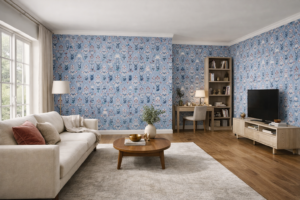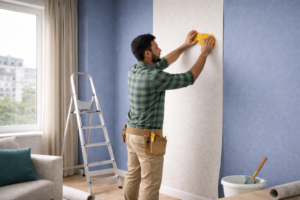

Many Indian homes struggle with peeling walls due to humidity and poor paint quality. Using wallpaper for wall is an effective way to protect surfaces while adding style and elegance.
Indian homes are full of personality—warm colours, layered textiles, brass accents, a sense of nostalgia and belonging. But there’s one thing that interrupts even the most beautifully designed space: peeling walls. Anyone living in a coastal city, a humid town, or even a high-rise in a metro has faced that one stubborn patch that keeps bubbling, cracking or flaking no matter how many times it’s repainted.
It’s frustrating, expensive, and worst of all—it steals the beauty of a home.
But what if the solution isn’t repainting every year?
What if the solution lies in choosing the right wallpaper for wall?
Luxury hotels, modern apartments, and thoughtfully designed homes around the world use wallpaper not just as décor, but as a functional layer against surface issues. Indian homes, especially, benefit from this more than people realise.
Let’s break it down — why walls peel so often in India, and how wallpaper becomes a long-term, aesthetic, cost-effective solution.
The Real Reasons Behind Dampness & Wall Damage
India’s climate is diverse, unpredictable, and intense. From coastal humidity to long monsoons to dry heat, walls face more environmental stress here than in many other parts of the world.
Peeling is just the symptom. The real causes lie deeper.
Monsoon Impact on Wall Surfaces
For most Indian cities, the monsoon season is beautiful — lush greenery, chai cravings, and a natural coolness in the air. But for walls, it’s the harshest time of the year. Humidity rises overnight, rainwater seeps into walls through micro-cracks, and moisture stays trapped for weeks.
Here’s what typically happens inside the wall:
- Rainwater absorption increases dramatically.
- Cement and plaster swell with moisture.
- The paint film softens and loses adhesion.
- Moisture tries to escape, creating bubbles or patches.
- Once dry, the paint flakes, cracks, and falls off.
Even newly built homes face this because the wall may not have cured completely before painting. Older homes suffer from repeated cycles of moisture expansion and contraction.
That’s why peeling walls become a yearly monsoon ritual in many Indian households.
Interior Humidity and Poor Ventilation
In India, daily living habits add to the problem.
Cooking, bathing, drying clothes indoors, leaving ACs off for long hours — all these activities increase indoor humidity. When moisture stays trapped inside the home:
- Walls absorb excess moisture.
- The surface becomes soft and prone to bubble formation.
- Paint begins losing grip faster.
- Mould spots start appearing in corners.
Even well-built homes face peeling if cross ventilation is poor.
Urban apartments, compact kitchens, utility corners, and windowless bathrooms are the biggest victims.
This is where wallpaper becomes a game-changer — not just for beauty, but for the way it creates a stable, protective surface.
Why Paint Fails Faster in India
Paint struggles in Indian homes for one main reason:
It sits directly on the plaster — and plaster absorbs moisture like a sponge.
No matter how premium the paint is, it will always expand, contract, bubble, or crack when the wall beneath it is unstable. The top coat simply cannot withstand fluctuating humidity.
Other reasons paint fails quickly:
- It offers no additional support layer.
- It cannot hide micro-cracks or surface imperfections.
- It fades faster in tropical sunlight.
- It gets stained easily in homes with children or pets.
- It requires frequent retouching, especially near doors, corners, and switchboards.
And the biggest drawback:
Painting is a repetitive expense, and every cycle is messy and time-consuming.
This is why more homeowners are shifting toward wallpaper—not only as décor, but as a long-term structural solution.
Climate-Specific Wall Problems
Different regions of India bring different wall challenges:
Coastal Cities (Mumbai, Goa, Chennai, Kochi)
- High humidity throughout the year
- Salt-air corrosion
- Persistent dampness
- Flaky paint and micro fungus spots
Metro Apartments (Delhi, Bangalore, Hyderabad, Pune)
- AC-on, AC-off temperature cycles
- Low ventilation in high-rises
- Cracks due to building settling
- Peeling in bathrooms and behind wardrobes
Dry & Hot Regions (Rajasthan, Gujarat, UP interiors)
- Heat expansion cracks
- Fading paint
- Chipping due to plaster dryness
Hilly Areas (Dehradun, Shillong, Ooty)
- Constant moisture
- Cold walls that sweat
- Paint bubbling during seasonal shifts
Across all these climates, one thing is common:
Bare painted walls simply don’t have enough support.
Which brings us to the solution that modern Indian homes are now embracing confidently.
How Wallpaper for Wall Helps Prevent Peeling
Wallpaper, especially when installed well, creates a protective barrier between your wall and the environment. Unlike paint (which is just a thin surface layer), wallpaper works like a stable skin for the wall.
Here’s how it helps:
1. Acts as a Shield Against Moisture
Wallpaper doesn’t let minor humidity directly attack the cement layer.
It absorbs small fluctuations and distributes them evenly.
This means:
- Walls remain stable from the inside.
- No bubbling on the paint layer (because there is no paint layer).
- No patchy damp look.
- No powdery flakes dropping every monsoon.
Homes that use wallpaper experience significantly fewer peeling issues compared to painted walls.j
2. Hides Minor Wall Imperfections Easily
Hairline cracks
Plaster unevenness
Old paint marks
Small dents around door frames
These are instantly hidden with wallpaper.
Paint only highlights imperfections. Wallpaper smoothens them visually.
This makes the home look neater, newer, and more polished — without repairing the entire wall.
3. Handles Temperature Swings Better Than Paint
Indian homes—especially apartments—go from:
AC cold → humid warm → sunny afternoon heat → night coolness.
These temperature swings cause paint to expand and crack.
Wallpaper adapts beautifully because:
- It expands and contracts less.
- It remains bonded tightly.
- It doesn’t peel with temperature changes.
This is one reason why luxury hotels use wallpaper extensively — stability.
4. Prevents Stains and Scuff Marks
Children scribbling on walls
Furniture rubbing against paint
Oil marks in kitchens
Backpack corners scraping near doors
Paint struggles with all of these.
Wallpaper, however:
- Resists marks better
- Gets cleaned easily
- Looks fresh longer
- Avoids frequent touch-ups
And because it stays intact for years, you avoid the annual repainting cycle that Indian homes are so used to.
5. Makes the Home Feel Warmer, Drier, and More Comfortable
Wallpaper adds a subtle insulating layer to walls.
This reduces the “cold wall” effect in monsoons and winters.
Indian families often say:
“The room suddenly feels warmer and more welcoming.”
That’s because wallpaper changes not just the look, but the feel of the space.
6. Elevates Home Aesthetics Instantly
Even a single wall can:
- Add depth
- Create personality
- Highlight furniture
- Enhance lighting
- Make a small room look bigger
- Turn a dull corner into a visual moment
Paint cannot achieve this level of refinement.
Wallpaper brings hotel-like finish and richness — effortlessly.
7. Works Beautifully in Indian Conditions
Wallpaper has quietly become the go-to choice for interior designers because:
- It adapts to humidity.
- It remains stable for years.
- It suits Indian colour preferences.
- It pairs well with Indian-style furniture and décor.
- It transforms rooms without structural work.
And the biggest win?
You don’t need to repaint every year.
Wallpaper stays fresh, elegant, and intact for long.
Why Eximus Wallpaper Makes the Difference
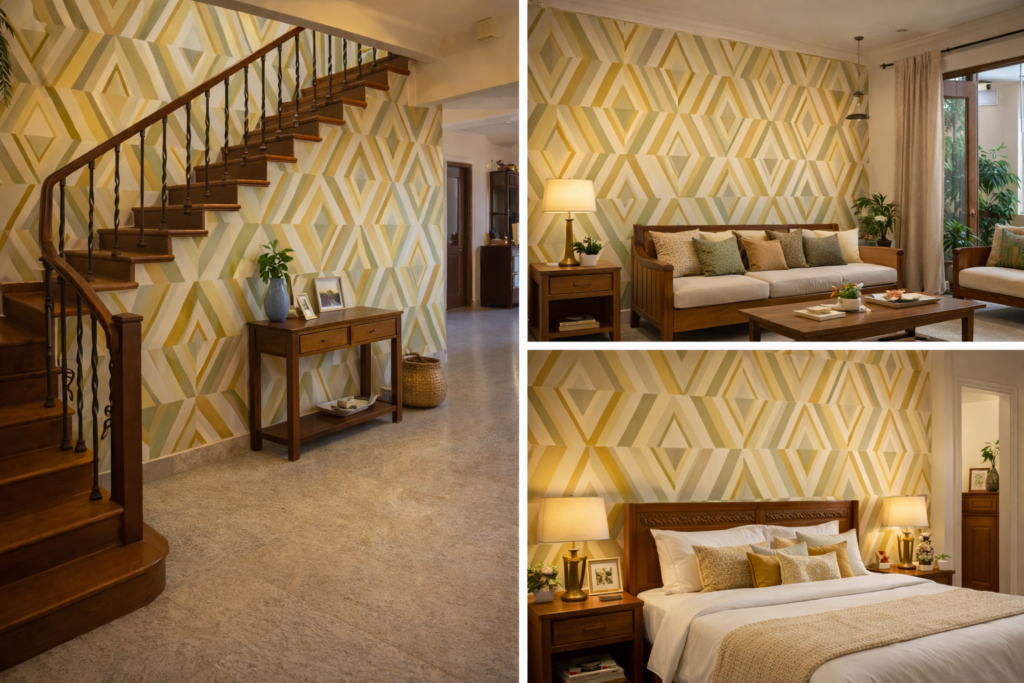
While many wallpapers look good, the finish, installation, and design language of Eximus Wallpaper bring another layer of refinement. Homes that choose Eximus often experience:
- A more premium aesthetic
- Thoughtfully curated patterns
- Smooth, seamless installations
- Designs that suit Indian architecture
- Long-lasting appearance
- Walls that stay protected season after season
The brand’s signature styles — from subtle textures to classic motifs — elevate everyday living in a way that paints simply cannot.
Eximus Wallpapers are chosen not only for aesthetics but for reliability, especially in Indian climates where peeling is a recurring problem.
Final Thoughts
Peeling walls in Indian homes are not a sign of poor maintenance — they’re a natural outcome of climate, humidity, and wall behaviour.
But repainting every year is not a long-term solution.
Wallpaper offers:
- Stability
- Beauty
- Protection
- Longevity
- A refined, hotel-like finish
And when chosen from a brand like Eximus Wallpaper, the transformation feels effortless, elegant, and lasting.
If you want your home to look polished, fresh, and protected — season after season — wallpaper is no longer a trend.
It’s a smarter way of living.
Discover premium wallpaper for wall with Eximus – website, YouTube channel, Facebook, and Instagram, and discover our curated collection of designer wallpapers. Reach us at +91 8828151202.