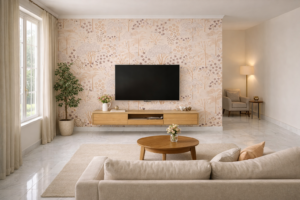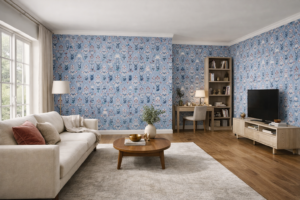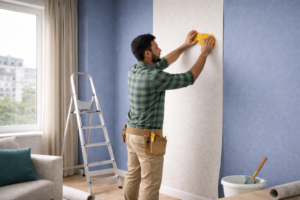

Wallpaper for the wall is often chosen first, last, or sometimes impulsively—but in well-designed homes, it quietly does the hardest job: tying furniture, lighting, and space together into one cohesive experience. When wallpaper, furniture, and lighting speak the same design language, a room feels calm, intentional, and lived-in. When they don’t, even expensive interiors can feel disjointed.
This blog focuses on the practical reality of matching wallpaper with furniture and lighting—not theory, not trends alone, but what actually works over time in modern Indian homes.
Wallpaper for the Wall: Why Coordination Matters More Than Pattern
Wallpaper for the wall isn’t meant to compete with furniture—it’s meant to support it. Interior designers often say the best wallpaper is the one you stop noticing consciously after a few weeks, yet miss deeply if it’s removed.
Homeowners frequently observe that:
- Loud wallpaper initially excites but later overwhelms
- Subtle wallpaper grows on you over time
- Well-matched wallpaper makes furniture feel more premium
Matching elements ensures the room matures gracefully, not just photographs well on day one.
Wallpaper for the Wall: Starting with Furniture, Not the Wall
Wallpaper for the wall should almost always be chosen after major furniture pieces are decided.
Interior designers typically advise:
“Furniture anchors the room. Wallpaper should complete it, not dictate it.”
Large elements like sofas, beds, wardrobes, and dining tables carry visual weight. Wallpaper that echoes their texture, tone, or material feels natural rather than forced.
Wallpaper for the Wall with Wooden Furniture
Wallpaper for the wall pairs beautifully with wood when undertones are respected.
Homeowner insight after long-term use:
- Warm woods feel calmer with earthy or fabric-textured wallpaper
- Dark wood feels heavier unless wallpaper is lighter and breathable
- Natural textures age better than glossy finishes
Designers often recommend textured or matte wallpapers when wood furniture dominates the room.
Wallpaper for the Wall with Upholstered Furniture
Wallpaper for the wall should never visually fight upholstered pieces.
Designer rule of thumb:
- If upholstery is patterned → wallpaper stays subtle
- If upholstery is solid → wallpaper can add depth
Many homeowners note that after a year or two, rooms with too many patterns feel visually tiring, while balanced rooms remain comforting.
Wallpaper for the Wall: Matching Wallpaper with Lighting Types
Wallpaper for the wall doesn’t exist in isolation—it reacts constantly to light.
This is something homeowners only realise after living in the space.
Wallpaper for the Wall under Natural Light
Wallpaper for the wall appears very different between morning and evening.
Real homeowner observations:
- Soft textures look richer in daylight
- Glossy wallpapers may reflect too much sunlight
- Neutral tones feel warmer during the day
Designers often visit homes at different times before finalising wallpaper selections, especially for sun-facing rooms.
Wallpaper for the Wall with Warm Artificial Lighting
Wallpaper for the wall under warm lighting feels inviting when chosen correctly.
Interior designers often suggest:
- Textured wallpapers for ambient lighting
- Avoiding stark whites under yellow lights
- Choosing finishes that softly diffuse light
Homeowners commonly report that textured wallpapers feel “softer” at night, especially in living rooms and bedrooms.
Wallpaper for the Wall with Accent & Spot Lighting
Wallpaper for the wall with texture or depth benefits most from accent lighting.
Directional lights:
- Highlight textures
- Create shadow play
- Add dimension without extra décor
This technique is frequently used in modern homes to elevate a simple wallpaper into a feature wall.
Wallpaper for the Wall: Colour Harmony Between Walls and Furniture
Wallpaper for the wall colour selection should be about harmony, not matching exactly.
Designer insight:
“Repeating tones is boring. Echoing undertones is elegant.”
For example:
- Grey furniture pairs better with greige or textured neutrals
- Beige furniture feels richer against layered textures
- Dark furniture benefits from lighter, breathable wallpapers
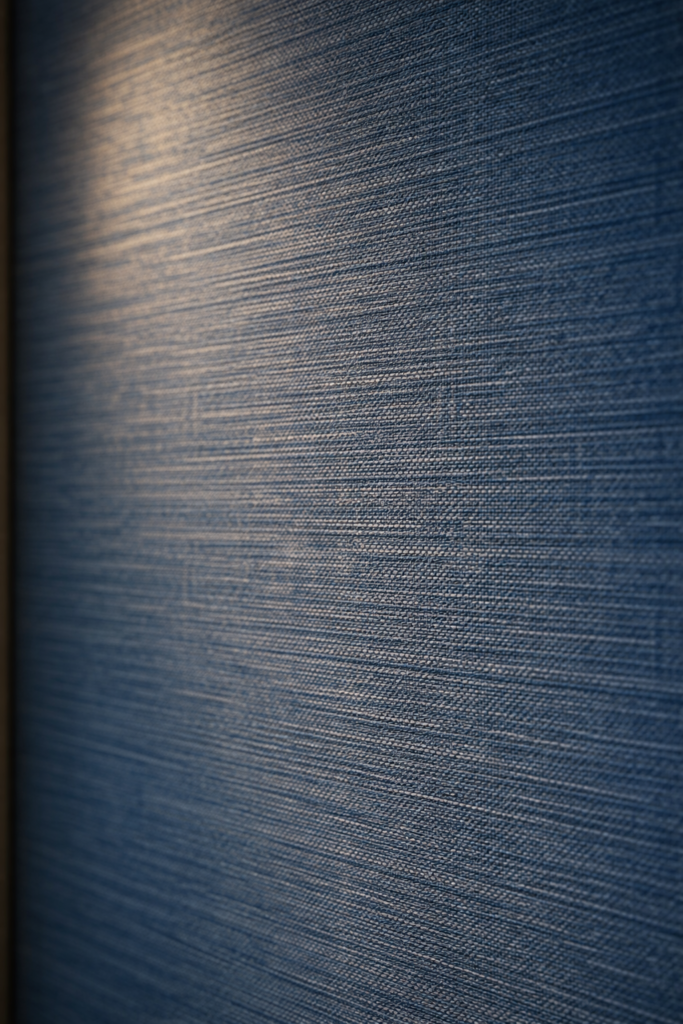
Homeowners often realise that contrast feels exciting initially, but harmony feels livable long-term.
Wallpaper for the Wall: How Rooms Feel After 6–12 Months
Wallpaper for the wall should be judged not by first impressions, but by how it feels over time.
Real feedback from homeowners includes:
- “The wall feels calm now, not loud”
- “Furniture stands out more than before”
- “Lighting feels softer without changing fixtures”
These responses almost always come from homes where wallpaper, furniture, and lighting were considered together.
Wallpaper for the Wall: Mistakes Designers See Repeatedly
Wallpaper for the wall mistakes aren’t about bad taste—they’re about rushed decisions.
Common issues:
- Choosing wallpaper in showrooms without furniture context
- Ignoring lighting direction
- Selecting wallpaper that photographs well but feels heavy daily
- Over-layering patterns
Interior designers often say restraint is the most underrated luxury.
Wallpaper for the Wall: Designing for Longevity, Not Trends
Wallpaper for the wall should support how people actually live.
Designers frequently advise homeowners to ask:
- Will this feel calm after a long day?
- Will furniture changes still work with this wall?
- Does this wallpaper age gracefully?
Homes that answer “yes” to these questions rarely feel dated.
This approach connects closely with Complete Guide to Choosing the Right Wallpaper for Wall in Modern Homes and complements 3D & Textured Wallpaper Designs That Elevate Modern Interiors.
Wallpaper for the Wall: Final Designer Takeaway
Wallpaper for the wall works best when it quietly supports everything else in the room. When matched thoughtfully with furniture and lighting, it doesn’t shout—it settles in.
The most successful interiors are the ones homeowners don’t feel the urge to constantly change. And more often than not, that stability starts with the right wallpaper choice.
Discover premium wallpaper for wall with Eximus – website, YouTube channel, Facebook, and Instagram, and discover our curated collection of designer wallpapers. Reach us at +91 8828151202.
FAQs
1. Should wallpaper for the wall match furniture exactly?
No. It should complement furniture tones, not copy them.
2. Does lighting affect wallpaper for the wall over time?
Yes. Lighting changes how wallpaper looks throughout the day and night.
3. Is textured wallpaper for the wall better for modern homes?
Often yes, because texture adds depth without visual noise.
4. Can wallpaper for the wall still work if furniture changes later?
Yes, if neutral tones and textures are chosen thoughtfully.